Welding trade pathway
Join metal. Build strength.
Install, fabricate and weld structural steel and mechanical components across construction, manufacturing, and industrial environments.
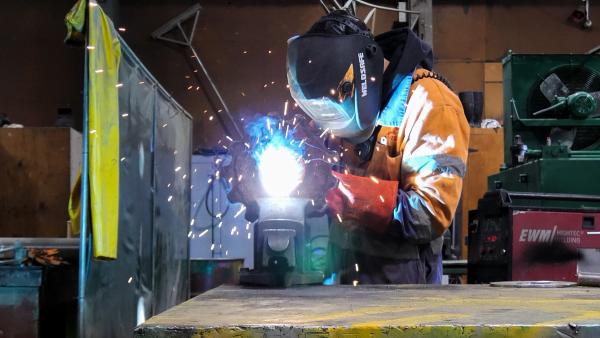
day to day
What you'll do
Fabricate and weld structural components
Use MIG, TIG, stick, and gas welding to join steel and metals to exact fabrication specifications.
Build and assemble engineered structures
Work on frames, tanks, machinery, and metal systems used in construction, manufacturing, and industrial projects.
Read drawings and follow specifications
Interpret technical plans accurately to measure, cut, prepare, and weld materials to required standards.
Inspect, test, and refine your work
Check weld quality, structural strength, and finish to ensure projects meet safety and industry requirements.
Where you'll work
Industries you can work in
Welders work in industries that build and maintain essential infrastructure and equipment.
You could work for companies involved in construction, infrastructure, and heavy industrial projects, fabricating structural steel, frameworks, tanks, and engineered components.
Opportunities also exist in the marine and transport sectors, working on boats, trailers, heavy vehicles, and specialised mechanical systems.
Many welders work in manufacturing and fabrication workshops, supporting production teams and maintaining equipment that keeps industries operating safely and efficiently.
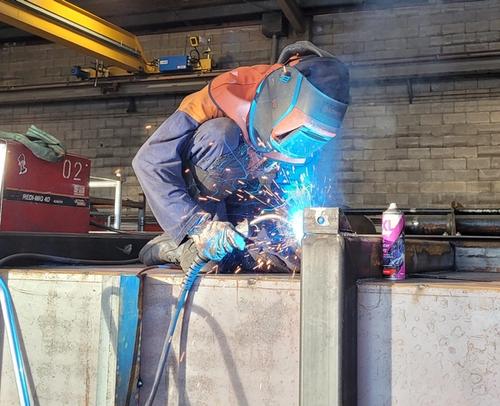
Training Overview
Your training pathway
Start with the New Zealand Certificate in Welding (Level 3). This programme builds the essential skills and knowledge needed to begin your career in welding.
You’ll learn to work safely, read basic engineering drawings, set up and maintain welding equipment, and complete a defined range of welding tasks to industry standards.
This qualification prepares you for entry-level roles such as production welder or trade assistant and provides a clear pathway into a fabrication apprenticeship (Level 4)
Why this trade?
A career with strong demand and real progression
Strong industry demand
Qualified welders are in steady demand across construction, infrastructure, manufacturing, and heavy engineering projects nationwide.
Visible, tangible work
From bridges and buildings to transport and industrial plants, your work creates structures and systems that industries rely on every day.
Specialist technical expertise
Precision welding, fabrication accuracy, and quality control ensure your skills remain highly valued across industrial sectors.
Clear career progression
Progress from welder to qualified fabricator, specialist technician, supervisor, or workshop leader as your experience grows.